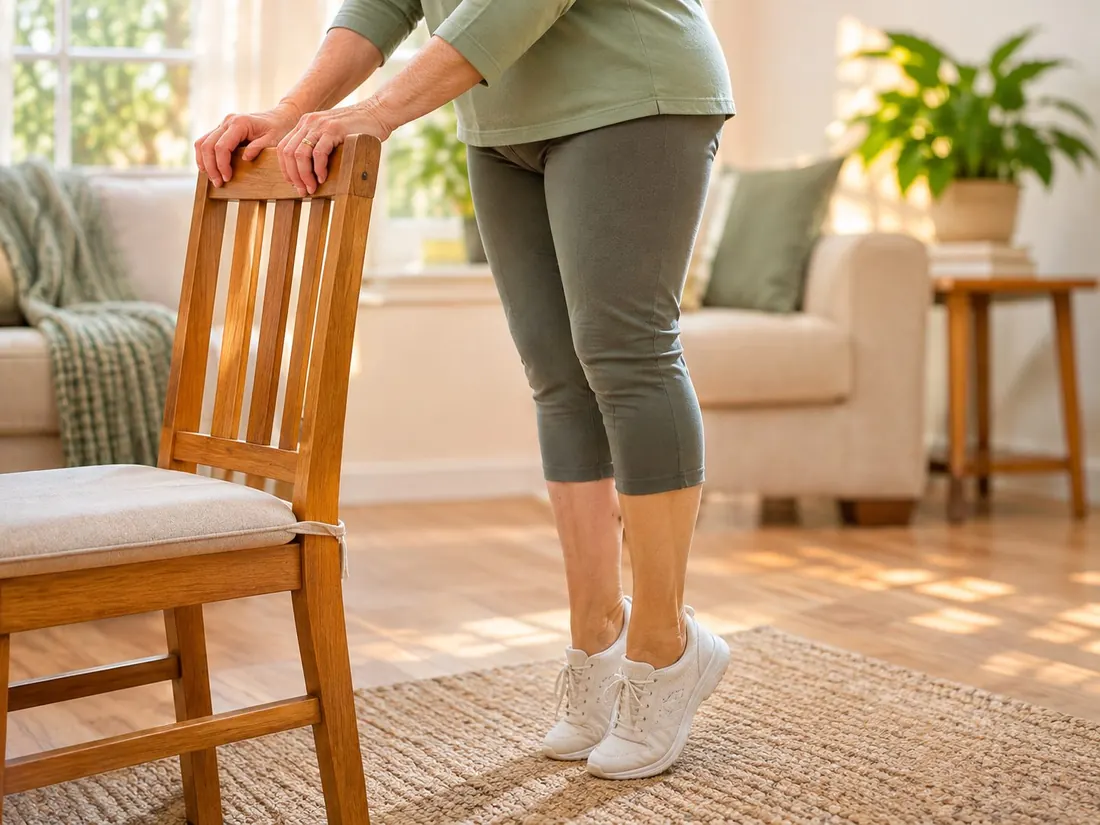
Not as steady as you used to be? Practise balance with a chair to hold.
Balance is a skill, and like any skill it improves with gentle, regular practice. A sturdy chair to hold lets you practise safely in your own home.
See the 14-day plan we reviewedOpens our honest review: every day, every move, the downsides.
Have you noticed this?
Stairs, curbs and getting out of the car take a little more care than they used to.
A quick turn or reaching for something high makes you feel unsure for a second.
Maybe a friend had a fall, and now you move more carefully, and less.
Why practise balance (and why with a chair)
About one in four adults aged 65 and older report a fall each year, according to the CDC. The CDC includes balance activities such as walking heel-to-toe and standing up from a sitting position in its activity recommendations for older adults (CDC guidance).
The catch: balance practice should feel safe. Holding the back of a sturdy chair lets you challenge your balance a little without the fear. If you have fallen recently, feel dizzy, or have a health condition, see your doctor first; a physical therapist can check your balance properly.
Three safe moves to start
Use a sturdy chair without wheels on a non-slip floor. For the first move you sit on it; for the other two you stand behind it, holding its back. Wear shoes with grip or go barefoot (never socks on a smooth floor):
- Sit-to-stand: sit near the front of the chair, lean forward "nose over toes", press up to stand, then sit down slowly. 6 times. Use your hands to help.
- Heel raises: holding the chair, rise onto the balls of your feet and lower slowly. 10 times.
- Side-to-side sway: holding the chair, shift your weight slowly onto one foot, then the other, both feet on the floor. 8 each side.
If you feel unsteady, sit down. Have someone nearby the first few times if you are nervous.


Steady on Your Feet: 14-Day Balance Plan
Those moves come from this plan. It starts with four seated days, adds standing work with the chair from Day 5, and finishes with longer holds and gentle reaching. It also includes a one-page home-safety checklist.
We read all 25 pages and noted where it shines and where a professional is the better choice.
Read the full reviewSee every page, the pros and cons, and who should skip it.
Quick answers
Are chair balance exercises safe for seniors?
Holding a sturdy chair makes balance practice much safer, but check with your doctor first if you have had falls, dizziness or a health condition.
How often should I practise balance?
Short, regular practice works best. The plan we reviewed uses about 10 minutes a day for 14 days, then a routine to keep.
What is the best chair for balance exercises?
A sturdy chair without wheels, placed against a wall or on a non-slip floor, with a back you can hold comfortably.